

Gamification has emerged as a transformative approach in education, leveraging game elements to enhance the learning experience. By incorporating points, badges, leaderboards, and challenges, gamification aims to increase student engagement, motivation, and knowledge retention. This article delves into the concept of gamification in online learning, exploring its benefits, implementation strategies, and the tools that can help educators create an enjoyable and effective learning environment. Understanding these elements can provide valuable insights into how gamification can make education more interactive and fun for learners of all ages.
Understanding Gamification in Education
Gamification in education involves applying game-design elements in non-game contexts to improve learner engagement and outcomes. This approach taps into the natural human inclination for competition, achievement, and collaboration. Game elements such as points, badges, leaderboards, and challenges are integrated into educational activities to make learning more interactive and enjoyable. The primary goal is not to turn education into a game but to use game mechanics to create a compelling and motivating learning environment.
Gamification leverages intrinsic and extrinsic motivators to engage students. Intrinsic motivators include personal satisfaction and the joy of learning, while extrinsic motivators involve rewards like points and badges. By blending these motivators, gamification can enhance student participation and commitment to their studies. Additionally, gamification encourages students to take ownership of their learning journey, fostering a sense of autonomy and responsibility.
Benefits of Gamification in Learning
Gamification offers several significant benefits that can enhance the educational experience. One of the primary advantages is increased motivation. By incorporating game mechanics such as points, levels, challenges, and rewards, gamification taps into students’ competitive spirit, making them more eager to participate in lessons. This increased motivation can lead to higher levels of engagement and effort from students, improving their overall learning outcomes.
Another key benefit is improved retention. Gamification encourages active learning, where students interact with the material rather than passively receiving information. This interaction helps students absorb and retain more information, making learning more effective. For example, earning points for completing tasks or solving problems can help reinforce knowledge and skills, leading to better long-term retention.
Gamification also enhances engagement by making learning feel more like playing a game rather than doing schoolwork. The fun, competitive elements of gamification can make students more interested in and excited about the material they are learning. This increased engagement can lead to more consistent attendance and participation in online learning activities.
Immediate feedback is another significant benefit of gamification. As students progress through gamified learning activities, they receive real-time feedback on their performance. This feedback helps them understand their strengths and areas for improvement, allowing them to adjust their learning strategies and improve continuously. This real-time feedback loop can be particularly beneficial in online learning environments, where immediate teacher feedback may not always be available.
Finally, gamification creates an enjoyable learning experience. By making education entertaining as well as educational, gamification can create a positive learning environment that students look forward to. This positive experience can reduce anxiety and stress associated with learning, making it easier for students to focus and perform well. Additionally, an enjoyable learning environment can foster a love of learning, encouraging students to pursue their education with enthusiasm and dedication.
Strategies for Implementing Gamification in Education
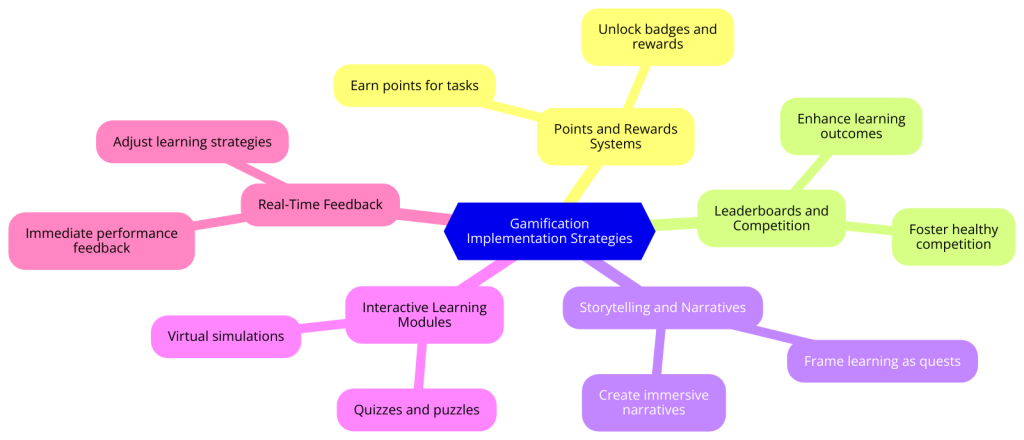
Implementing gamification effectively requires careful planning and thoughtful design. Here are some strategies to consider:
Points and Rewards Systems: Setting up a system where students earn points for completing tasks and challenges can drive motivation. Points can accumulate to unlock badges or rewards, providing a sense of achievement and progress. For example, students might earn points for completing assignments, participating in discussions, or helping peers, which can then be redeemed for rewards like homework passes or extra credit.
Leaderboards and Healthy Competition: Introducing leaderboards can foster healthy competition among students, motivating them to excel and improve their rankings. This competition encourages students to put in more effort and enhances their learning outcomes. However, it’s important to balance competition with collaboration to ensure that all students benefit from the learning experience.
Storytelling and Narratives: Creating immersive narratives and storytelling elements can make lessons more relatable and memorable. By framing learning tasks as quests and challenges, students embark on exciting journeys to acquire new knowledge and skills. For example, a history lesson might be structured as a quest to uncover ancient artifacts, with students earning points and badges for completing challenges along the way.
Interactive Learning Modules: Incorporating interactive elements such as quizzes, puzzles, and simulations can make learning more engaging. These modules help students understand complex concepts through hands-on experiences. Interactive learning modules can be particularly effective in subjects like science and math, where students can experiment with virtual simulations to learn about different phenomena.
Real-Time Feedback: Providing immediate feedback on students’ performance keeps them engaged and helps them adjust their learning strategies in real-time. This approach ensures that students stay on track and improve continuously. For example, a gamified quiz might provide instant feedback on correct and incorrect answers, helping students learn from their mistakes and reinforcing their understanding of the material.
Examples of Gamification in Action
Gamification can be applied across various subjects and educational levels. For instance, language learning apps like Duolingo use points, levels, and rewards to make learning new languages fun and engaging. In STEM education, platforms like Minecraft: Education Edition allow students to explore and build virtual worlds while learning concepts in science, technology, engineering, and mathematics. Educational games like CodeCombat teach computer science through real-time gameplay, encouraging students to solve coding challenges and progress through levels. These examples show how gamification can transform traditional learning into an interactive and motivating experience.
Challenges and Considerations
While gamification holds great promise, it also presents challenges. One key consideration is ensuring that game elements do not overshadow learning objectives. It’s essential to balance competition with collaboration and address the diverse needs of learners. Additionally, educators must be mindful of the potential for increased screen time and design gamified experiences that are inclusive and accessible to all students. Properly implemented, gamification can enhance education without compromising its core goals.
Another challenge is the potential for students to become too focused on extrinsic rewards, such as points and badges, rather than intrinsic motivation for learning. Educators must strive to create a balance between extrinsic and intrinsic motivators, encouraging students to find joy and satisfaction in the learning process itself. Additionally, the competitive aspects of gamification can sometimes create pressure and anxiety for some students. It’s important to create a supportive environment where all students feel encouraged to participate and succeed, regardless of their position on the leaderboard.
Tools for Gamifying Learning
Several tools and platforms can help educators implement gamification effectively:
- Kahoot!: This platform allows educators to create interactive quizzes and games that engage students in real-time. Kahoot! is known for its vibrant interface and ability to create a fun and competitive learning environment. Educators can use Kahoot! to review material, conduct formative assessments, and reinforce key concepts.
- Classcraft: An online role-playing game that turns classroom activities into an adventure, motivating students through collaboration and competition. Classcraft allows students to create avatars, earn points, and complete quests, making learning an immersive and enjoyable experience. The platform also includes tools for tracking student progress and providing real-time feedback.
- Duolingo: A language-learning app that uses gamified elements to teach new languages in a fun and interactive way. Duolingo incorporates points, levels, and rewards to motivate learners and make language acquisition an enjoyable process. The app’s bite-sized lessons and interactive exercises help reinforce vocabulary and grammar skills.
- Quizizz: This tool creates engaging and competitive quizzes that promote healthy competition among students. Quizizz offers live multiplayer modes and allows educators to customize quizzes to suit their curriculum. The platform’s instant feedback and performance analytics help educators track student progress and adjust their teaching strategies accordingly.
- EdApp: A mobile-oriented learning platform that incorporates gamification and microlearning to make education more engaging and less time-consuming. EdApp allows educators to create interactive lessons that include quizzes, flashcards, and other gamified elements. The platform’s user-friendly interface and accessibility make it a valuable tool for both teachers and students.
In Conclusion
Gamification in online learning offers a dynamic and innovative approach to education, making learning more engaging, enjoyable, and effective. By integrating game elements into educational content, educators can create rich, interactive learning experiences that motivate students, enhance understanding, and foster a love for learning. As we continue to explore and refine these strategies, the potential for gamification in education to transform how we teach and learn is boundless. Embracing this approach can lead to a more motivated, engaged, and informed generation of learners, ready to tackle the challenges of the future.
By understanding and applying the principles of gamification, educators can create a learning environment that not only meets educational objectives but also makes learning an exciting and rewarding journey for students. As technology continues to evolve, the possibilities for gamification in education will only expand, offering new ways to engage and inspire students. Whether through interactive quizzes, immersive simulations, or collaborative challenges, gamification has the power to make education fun and impactful, paving the way for a brighter educational future.